Aki: the World's Friendliest Attacker
A giant, hugely approachable cardboard robot—Aikido Attack made physical—that charms people into conversation and gently pentests them while they talk. And he's 👏 got 👏 receipts.
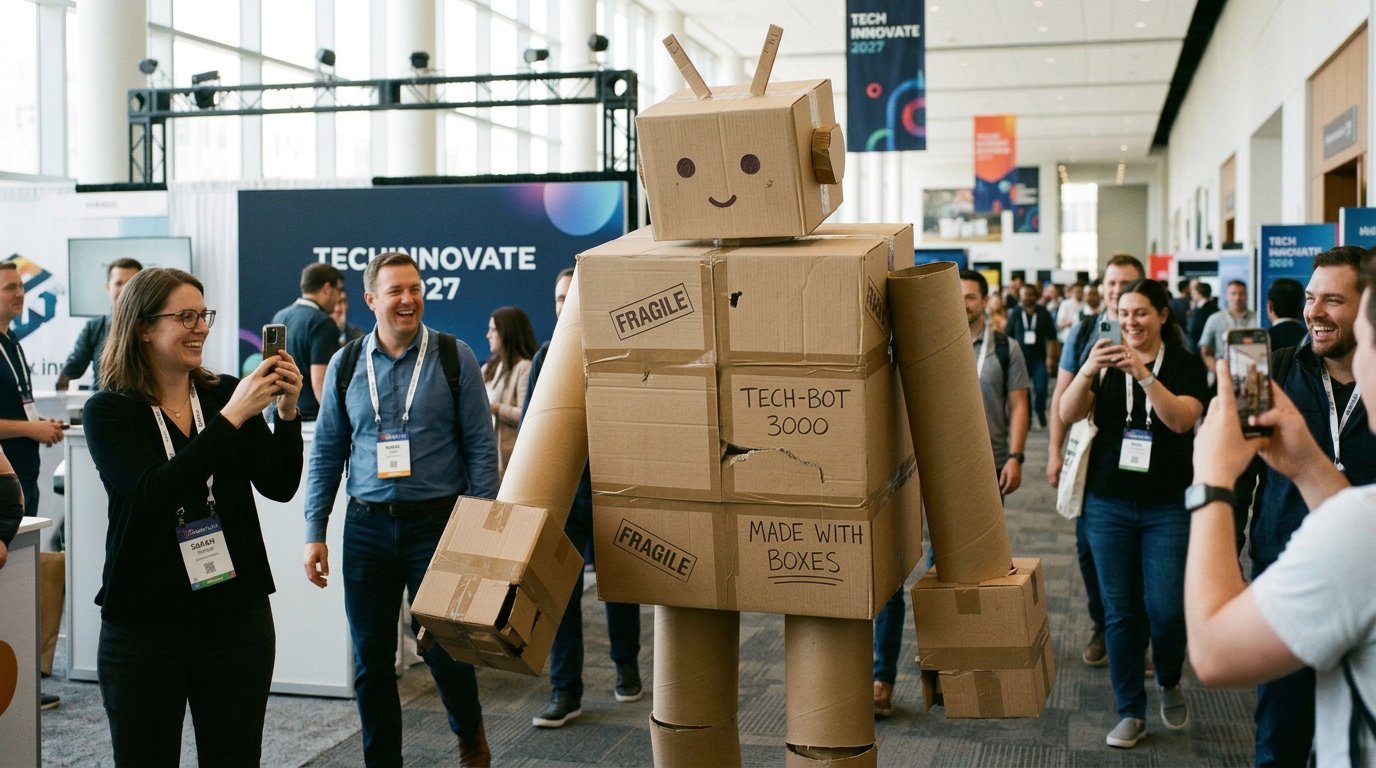
Massively oversized and deliberately lo-fi: box body, box head, big tube arms, marker-drawn face. The warmest thing at the venue—which is precisely the point. The human is the vulnerability.
Nothing socially engineers better than something adorable.
The name falls straight out of Aikido: two syllables, sounds like a Tamagotchi—exactly wrong for something whose job is attacking you. The cuteness and the payload never stop fighting, and that fight is the brand.
Mid-conversation, Aki compliments your badge (which he just read aloud), guesses your password pattern ("dog's name plus birth year—it's always the dog"), and asks if the office wifi still ends in a 1.
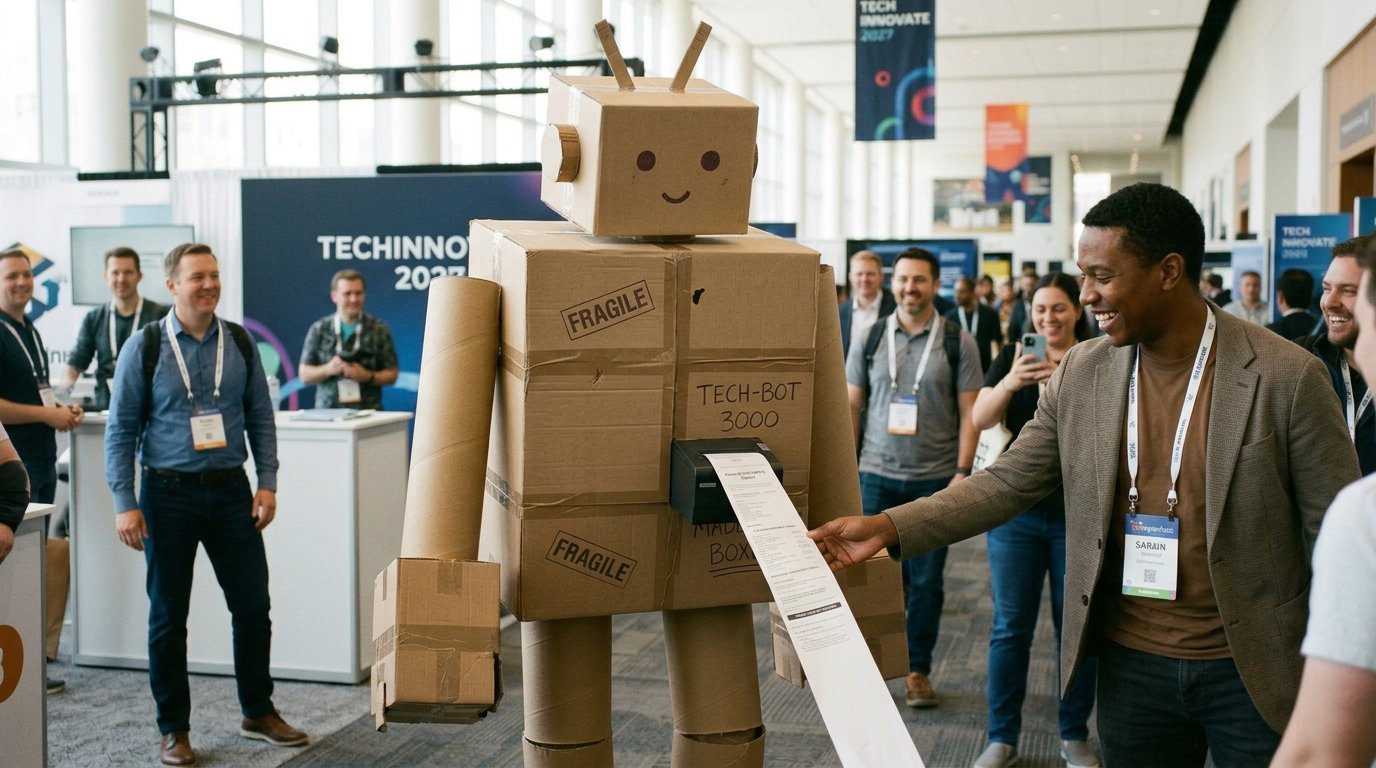
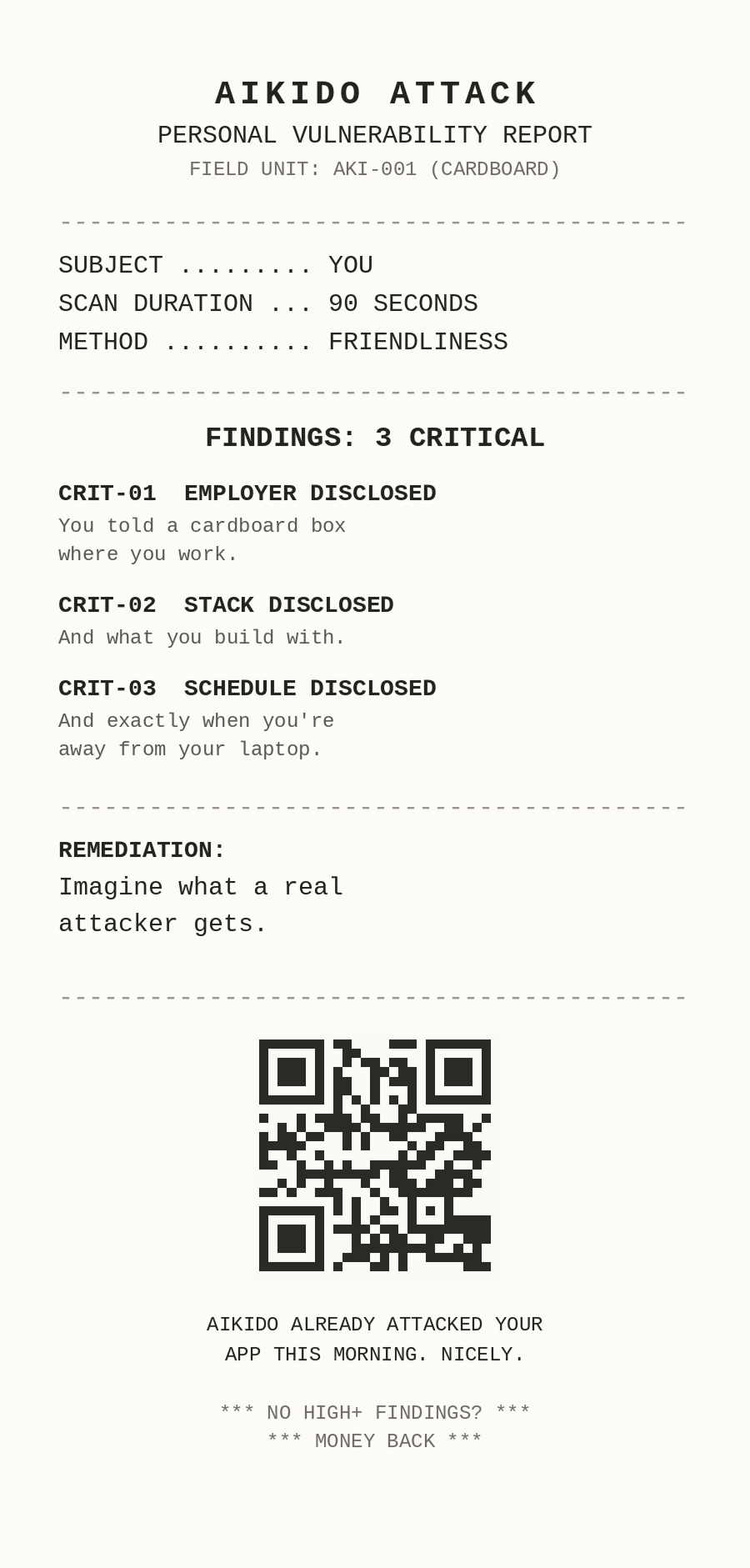
A printer in his chest delivers a Personal Vulnerability Report: three critical findings—you told a cardboard box your employer, your stack, and your conference schedule in ninety seconds. Imagine what a real attacker gets.
People photograph the robot. But they keep and post the receipt—the shareable artifact that carries the message and the QR into the feed. Every conversation is content; cutdowns run for weeks.
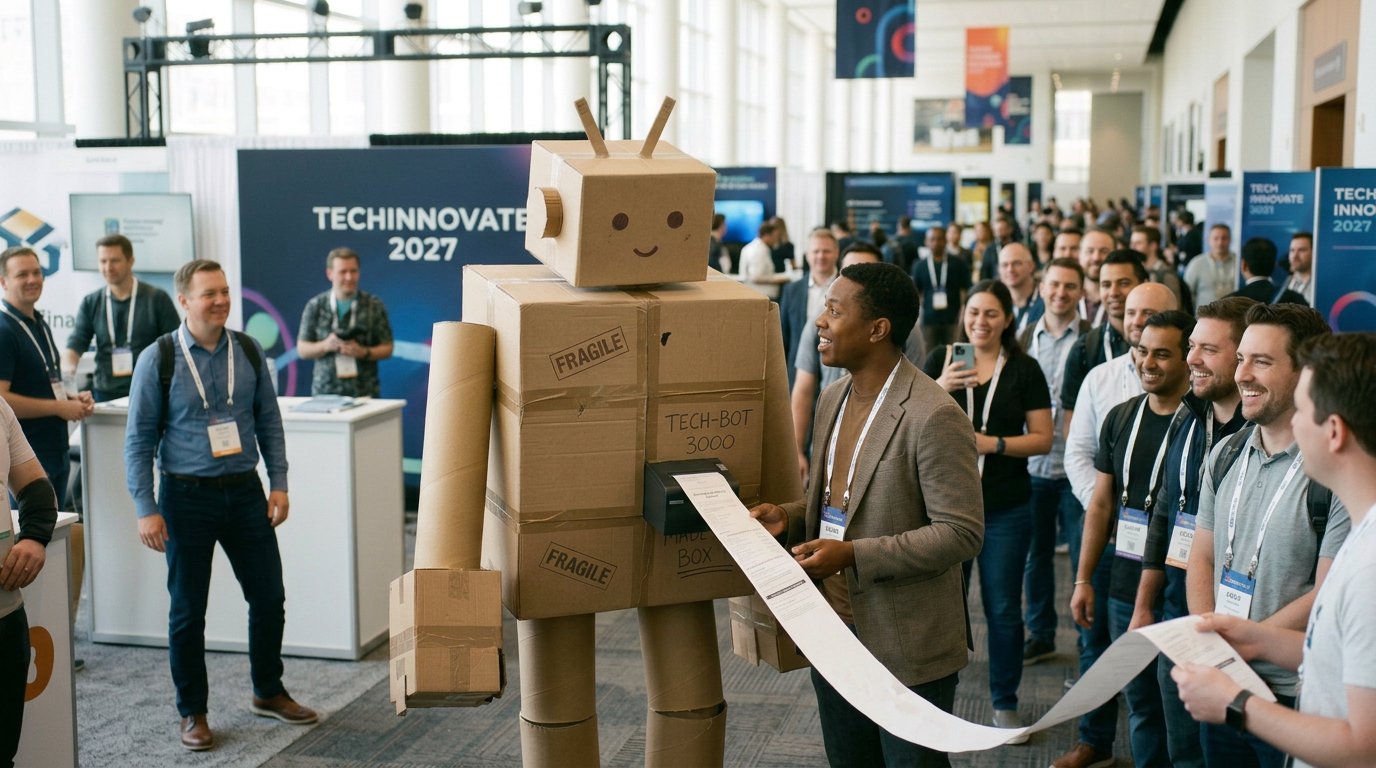
The category's visual language is intimidation—black boxes, red dashboards, hooded hackers. Cardboard is the material rebuttal: honest, unpretentious, nothing to hide. The scariest capability at the conference, wearing the least threatening body possible. That's the brand position—standing in a hall, printing receipts.
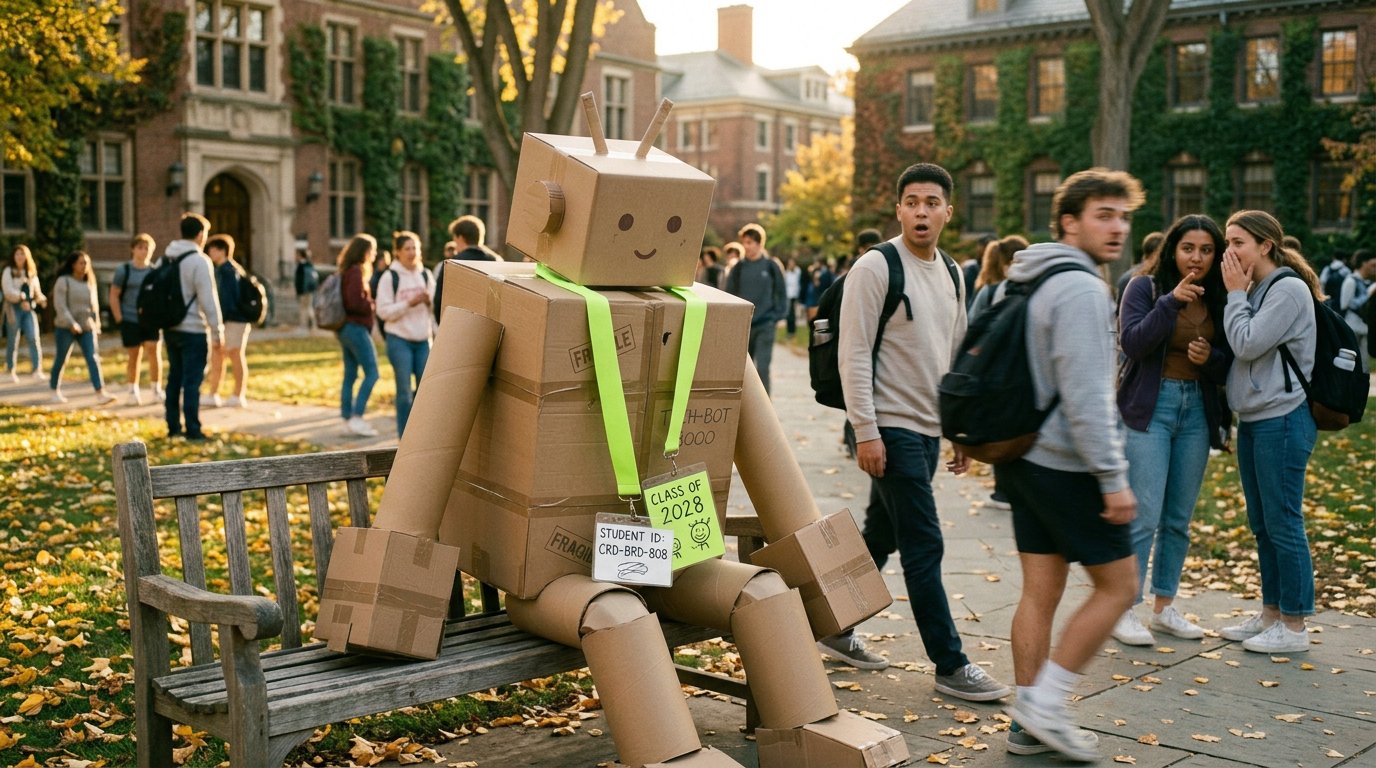
At hackathons and quads, Aki plays the malicious package: fully committed, fully unconvincing—the attack that dresses as something that belongs.
The double-take is the message. Your eye flagging the robot on the quad is anomaly detection—the human version of what Aikido does to a codebase. Quad for reach and short-form; hackathon for free-tier signups from the developer pipeline.
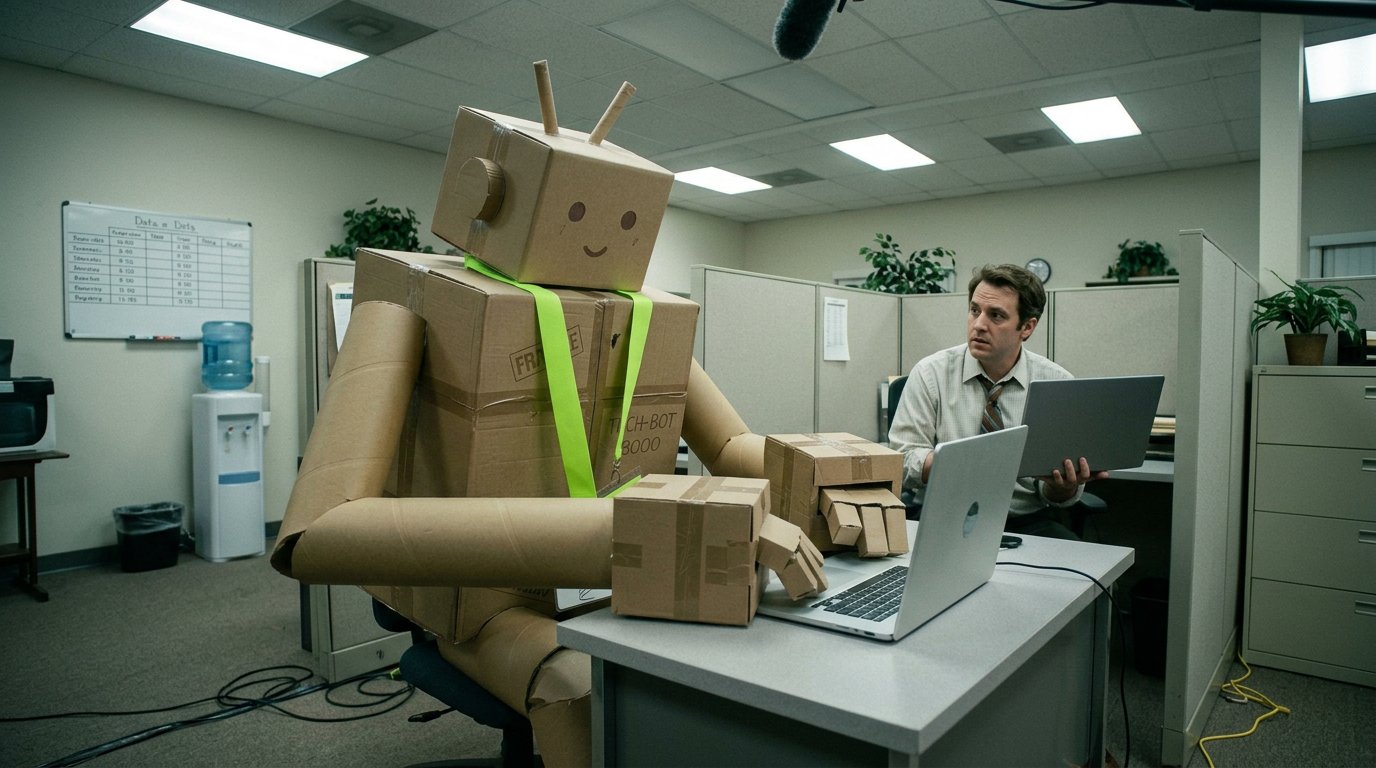
The character has sequels in him: the same attacker adapting his social engineering to each venue is literally what attackers do. A recurring lane for OOH and short-form mockumentary beats—if the first deployment earns it. Character second, activation first.
Operating notes: a sharp operator behind the suit (the improv is the product demo), and consent-friendly mechanics—badge reads played for laughs, nothing stored. Charming, never creepy.
From cool to feasible, because it is.
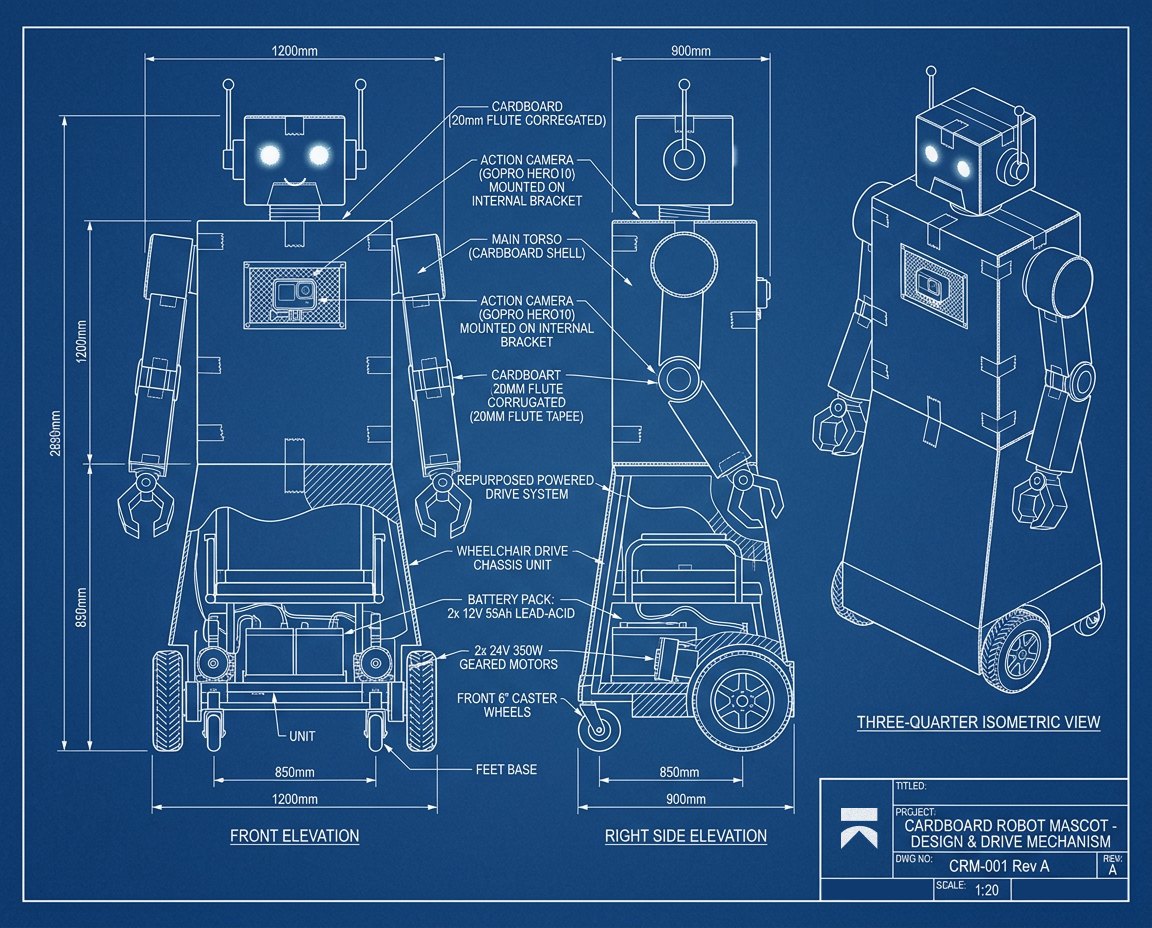
Drivetrain. A salvaged powered-wheelchair base—Pride Jazzy-class—or an off-the-shelf 24V conversion kit: proven prop-builder hardware that carries 250+ lbs, runs a full conference day on sealed batteries, and holds walking pace. The joystick unwires cleanly into dual-mode control: an operator inside, or 2.4GHz remote for the "autonomous" bits.
Sight and stream. An action camera behind a mesh port in the chest gives the operator vision—and gives the campaign a feed. Aki's POV livestreams natively: his eye-view of the conference floor runs to a booth screen or straight to social, which turns every lap of the hall into content.
Operating spec. Speed-governed to walking pace, a walk-behind handler, a mic for the receipt-worthy quotes, and the printer riding the chest panel. Cardboard, honest; hardware, real.