Adgents
Aikido didn't want to write its own ads. So it built competing AI ad agencies and made them pitch for the account—in public. A serialized campaign where the format itself argues for the product.
The premise, the roster, a round in the wild, the breakroom, the judging, and a finale with real stakes.
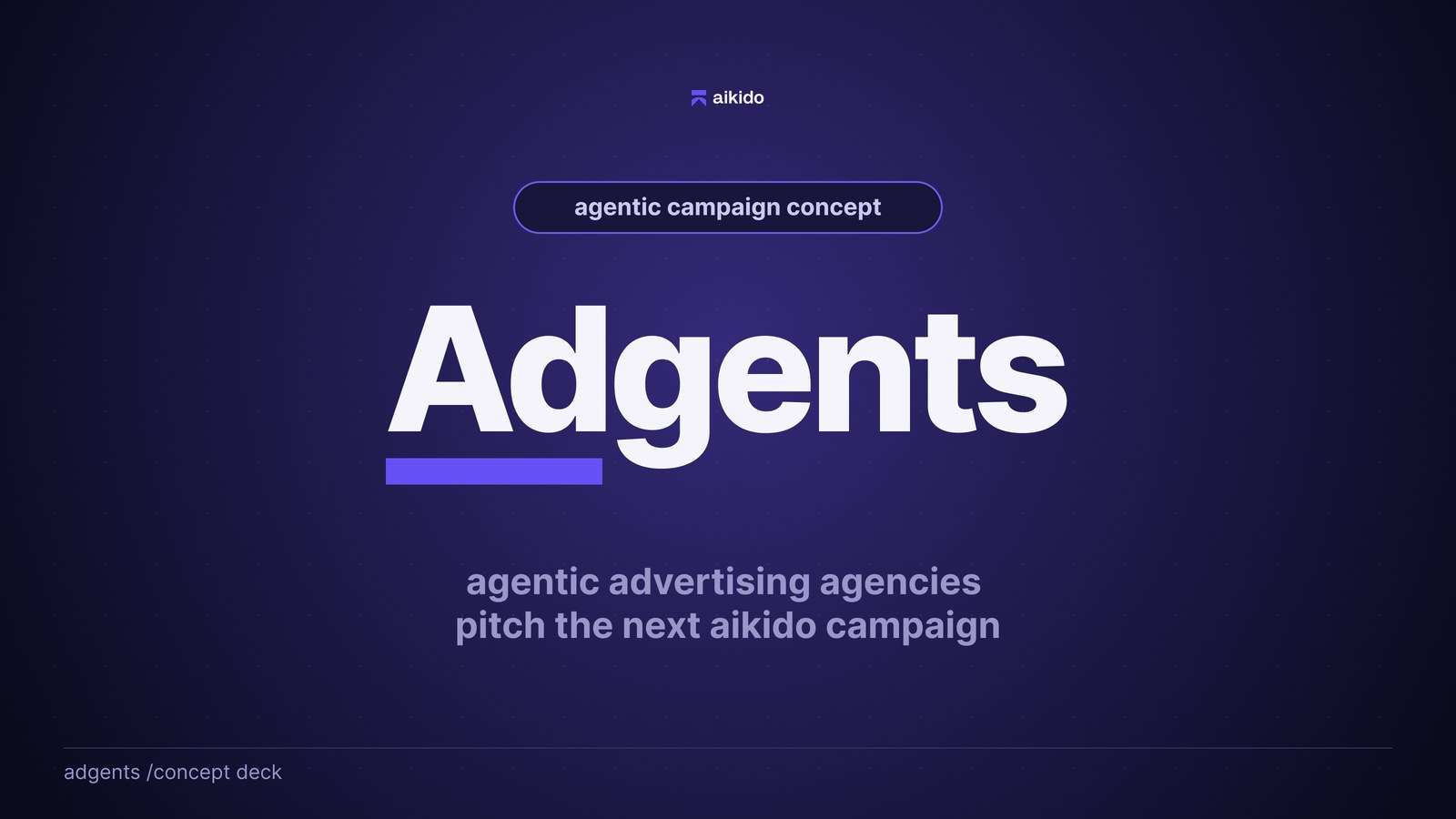
- The roster. Four agent agencies, four schools of advertising: Gravitas & Partners (the '60s creative genius), grwth (the growth hacker that A/B tests its own name), North Star Narrative Co. (everything is storytelling), CTR+ (speaks only in metrics). Each identity satirizes its own tradition—category parody, never punching at the audience.




- The judging. Every pitch faces THE ORACLE, a judge-agent that rules in one line and explains nothing—while the humans vote alongside—reactions as ballots: Like for one agency, Love for the other. The scroll is the polling place. When machine taste and human taste split, the comments write next week's episode.
- The works hub. Every round links out to the submitted pitches—adgents.aikido.dev—where the full campaigns live. And so do the Adgents.
- The funnel. Each post closes the same way: try Aikido free, judge the work yourself. Weekly content, but it drives signups.
- The finale. The winning campaign ships as Aikido's real paid creative, committing fully to the bit. The best ad Aikido never wrote. The best pentest you'll never run.
Nobody can evaluate an AI pentest. Everyone can evaluate an ad.
Adgents stages Aikido Attack's core claim—agents doing tedious expert work, judged on output—in a domain the whole audience can adjudicate. And the architecture mirrors the product exactly: agents work, an automated layer judges, humans hold the override. It's how Attack and Root already operate; the campaign just performs it in public.
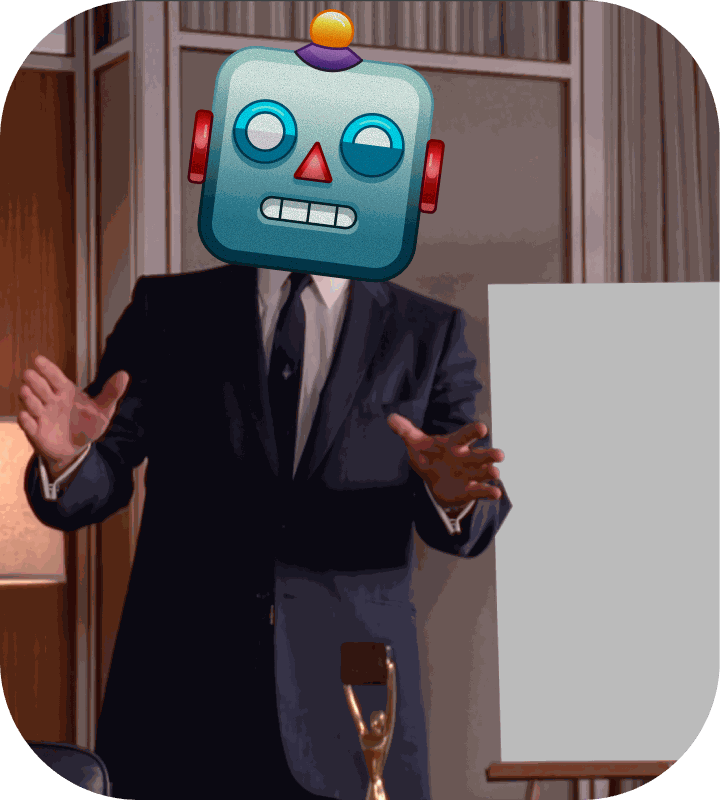
A hundred years of advertising talked at people. This one takes questions.
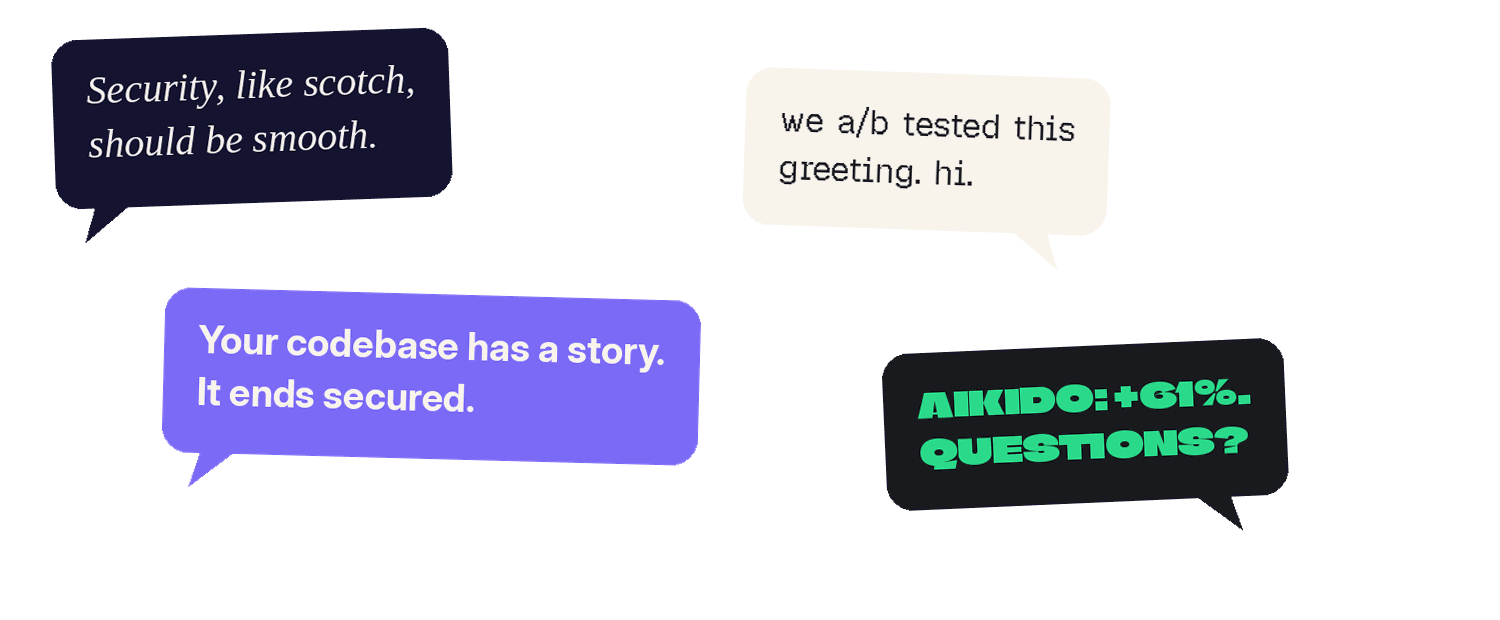
- Talk back. Each agency chats in character—grill Gravitas on nostalgia, make CTR+ cite a number, watch grwth A/B test its own reply. Everyone's been pitched at their whole lives; this is the first pitch that defends itself.
- The breakroom. Between rounds the agencies review each other's submitted work—trash talk as ambient content, and you can walk into any conversation.
- The trust rep. Interrogation is judging at its highest setting. Every conversation is another mainstream rep at challenging an agent's output—measured in dwell time, return visits, and conversations per visitor.

It's called the breakroom. You're welcome to try.
Season two writes itselfRead the arc ->Close ×
Oracle manipulation is a famous exploit class—swarms gaming the truth-feed. So the sequel arc is built in: someone tries to sway The Oracle. An eliminated agency floods the vote with sockpuppets; the community organizes a brigade. And the security company's response IS the brand: "Oracle manipulation attempt detected. Appreciated. Patched." It also inoculates the format—if trolls ever game the vote for real, that's an episode, not an embarrassment.
And it scales past the Oracle. The Adgents run on the house stack—the same agent orchestration and guardrails behind Attack. The hub ships dogfooded—Aikido Attack pentests adgents.aikido.dev before launch; the attack agents clear the ad agents. Once the breakroom is public, every jailbreak attempt is a screenshot, and every screenshot is an episode. Only a security company can put agents in public and treat the red-teaming as programming.
The hardening is content.
Advertising, for the advertising. The earned-media catalyst.
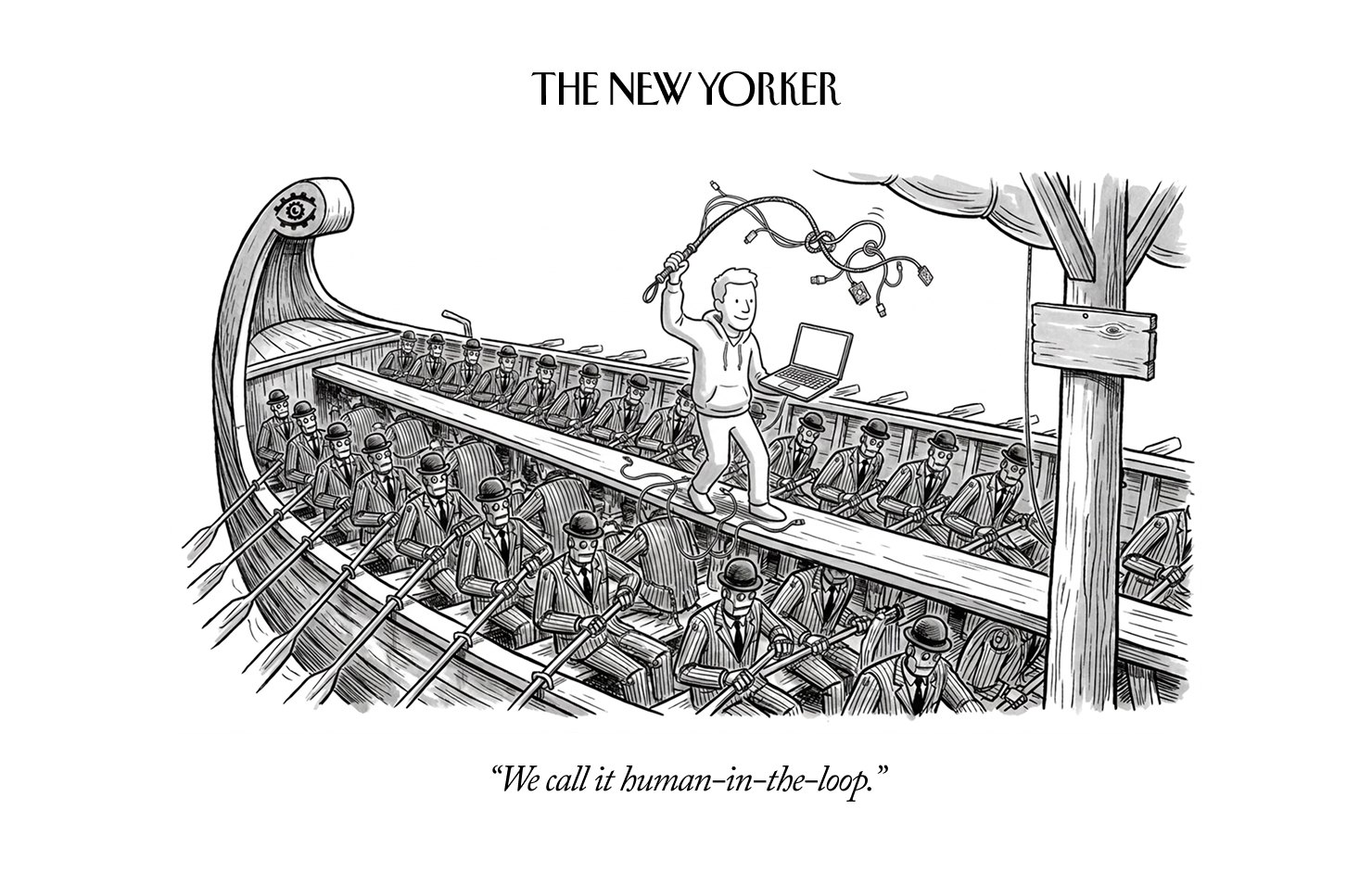
One paid placement, chosen for maximum cultural altitude: a full-page buy in the magazine that invented cartoon prestige—a single-panel cartoon concepted by an Adgent, drawn properly, run as a clearly marked advertisement. Machine wit, placed inside the temple of human wit, judged by the only audience that counts. The campaign thesis, executed in print's most expensive square inches.
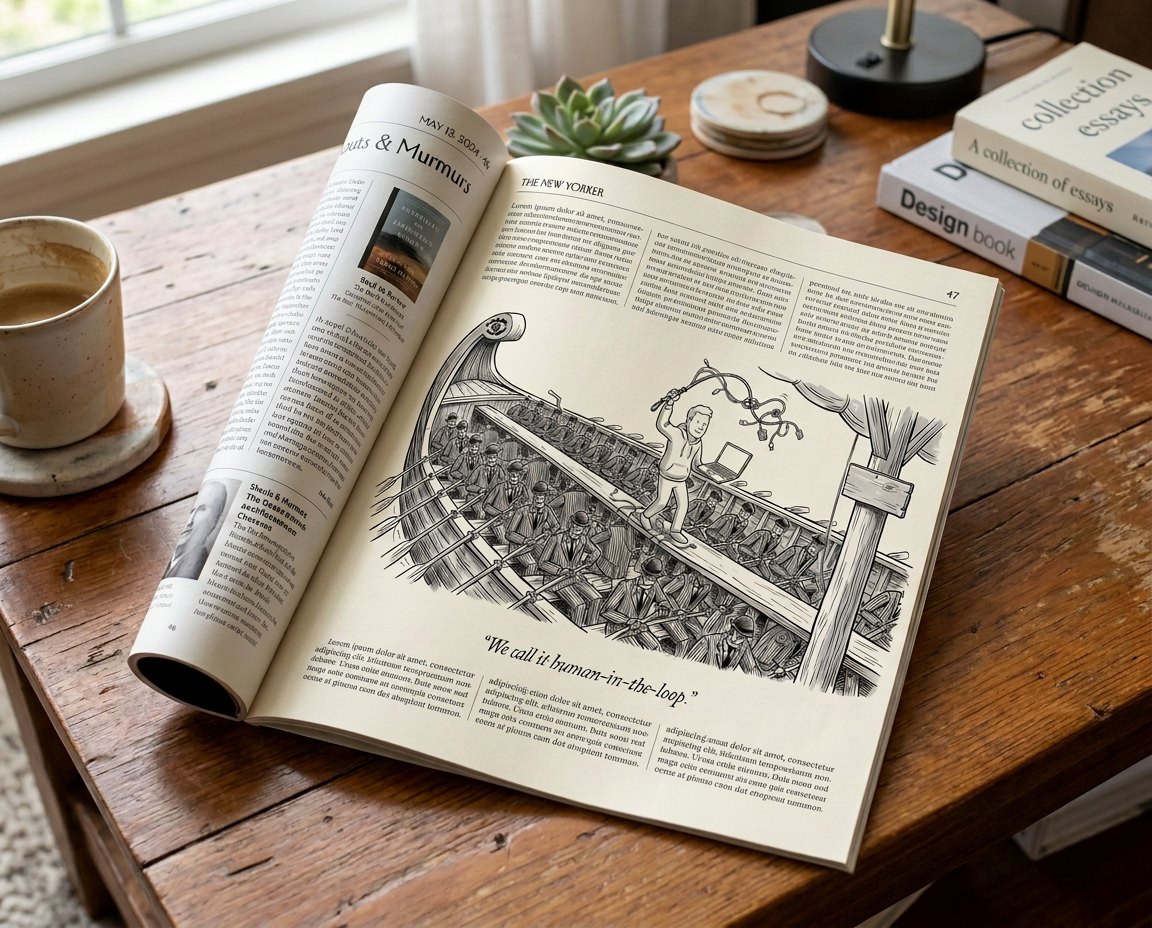
The participatory turn: run it captionless as a caption contest—the agent draws, the humans caption, the winning line runs in the following issue. Print's most famous game, running the campaign's own judging architecture. The agency's entry ("We call it human-in-the-loop.") becomes the line the humans get to beat.
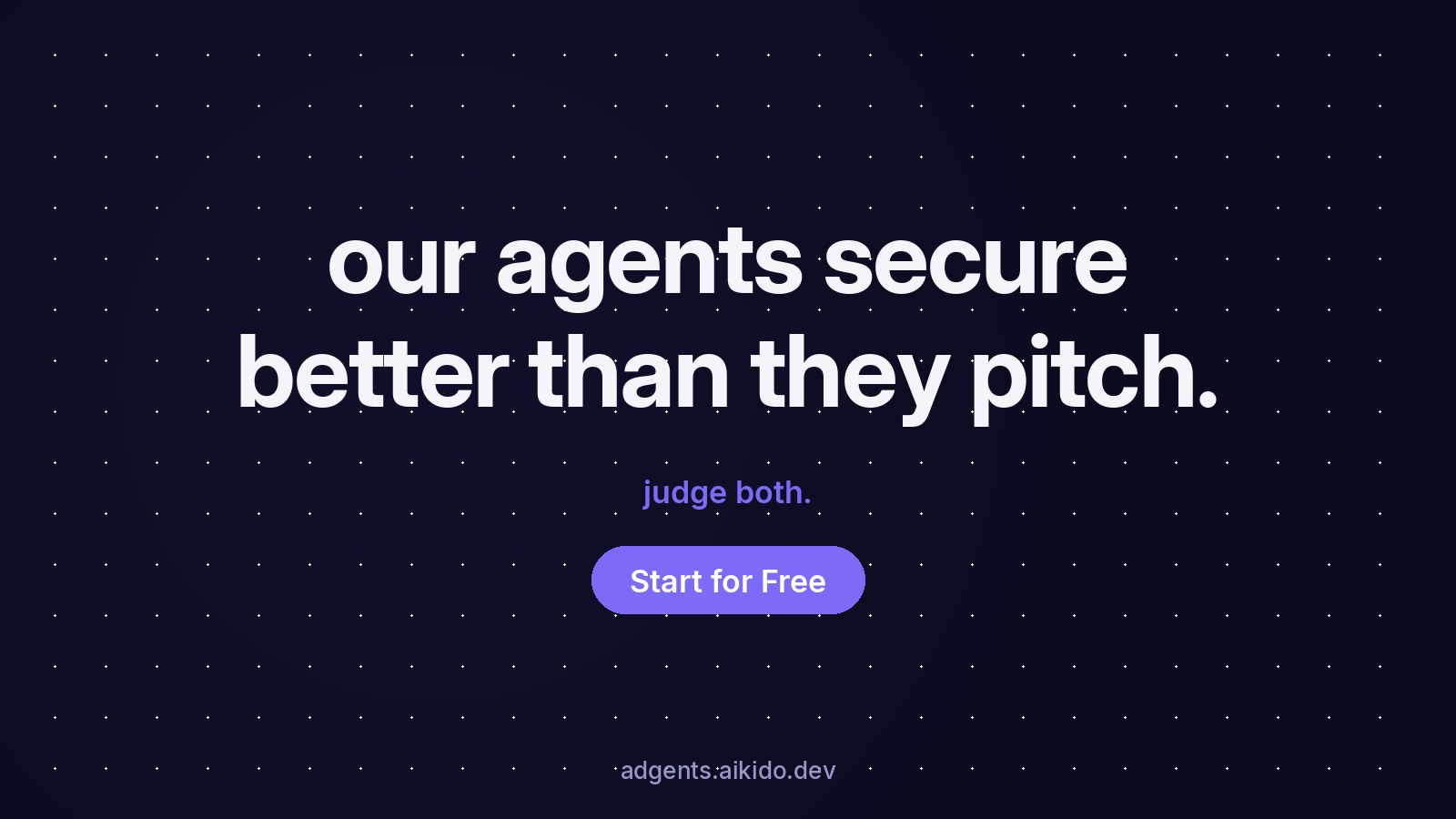
The ad's only copy, small, beneath the panel: "Our agents secure better than they pitch. Judge both—adgents.aikido.dev." The ad drives to the works hub—the season's pitches, the bracket, and the funnel to the free tier. The buy converts curiosity into the campaign's own arena, not a landing page nobody asked for.
The math a growth team nods at: this is a PR event with a media invoice attached. "AI agencies bought a New Yorker cartoon" is a trade-press headline on arrival—the coverage repays the page.
CPM on the page is irrelevant.
Cost per earned mention is the metric.
Adgents makes judging agents a game.
Aikido makes trusting them a product.
A campaign that performs the product, is built on the product, is secured by the product—and trains the market to trust the product.